Editorial Analysis
Something Old, Something New
By William Collinson
July 28, 2026
5 min read
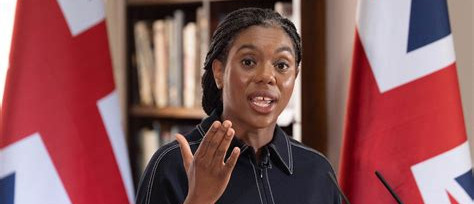
Image: britannica.com
Reform has led in the polls since early 2025, and has led comfortably. The old solid duopoly of the Conservatives and Labour seemed broken, polling at their lowest, a combined 34% in January 2026 (Politico). This is a far cry from decades past, where third parties would be lucky to break double digits in seats. Many commentators suggested that we had reached the end of the two-party system that had characterised British politics since the 1920s. Increasingly, these claims appear hysterical and reactionary. While hindsight is a wonderful thing, there was always a binding issue at the heart of Reform UK, something none of the other major parties in the UK suffer from. The Greens are still the Greens without Zak Polanski. The same can be said for the Conservatives and Labour. What are Reform without Nigel Farage?
Election forecasting by FPW has highlighted over the past few weeks how Reform has collapsed in projected seats, regardless of its stable national poll average. This is due to a multitude of reasons, with dissatisfaction with the polarising figure of Farage chief among them. However, despite the embarrassing spectacle of the Clacton by-election alongside scandals marring innumerable Reform candidates and, importantly, Farage, the insurgent party remains a considerable electoral force. No third party has won more than 100 seats in a general election since the Liberals did so in 1923; our projections suggest this would change, with Reform, Labour and the Conservatives all projected to win over 100 seats. While in 1983 the SDP-Liberal alliance won 25.4% of the vote, and only 23 seats, this fate seems unlikely for Reform. Support for the insurgent party on the right is concentrated to an extent in 'left-behind' constituencies, meaning it is less susceptible to the pitfalls of the first-past-the-post electoral system than the SDP-Liberal alliance of the 1980s.
Voters appear in flux at present; one could certainly see the drop in Reform's support bottoming out, with the party winning a solid chunk of the Commons at the next Westminster election. This would constitute voters, and therefore constituencies, fed up with the traditional political system and unwilling to return to either Labour or the Conservatives.
While the first-past-the-post system discourages a wasted vote, Reform has carved itself into the fabric of the British electorate: those angry at the system and establishment, those who feel left behind and the vote on the right to ‘tear everything down’ and build anew. This force is increasingly prevalent in British politics. It won in the Brexit debate in 2016. It has powered Reform over the past 18 months to the top of the polls. Furthermore, it has helped prompt an end to the traditional dominance of the two old parties of British politics. Yet, it most certainly does not signal the end of both traditional parties, simply their duopoly on power. Labour under Burnham has a newfound sense of optimism and hope that moderate politics in Britain has seldom felt for years. Moderate, progressive politics can lead to real change. Perhaps that is what Burnham has hoped to signal in his early days: an emotive and incredibly visible pledge to end rough sleeping nationally, No. 10 North and his slashing of taxation of energy bills. Furthermore, under Kemi Badenoch, the Conservatives have proven a resilient force.
Far from the death of the Conservatives, Badenoch has been able to turn the fortunes of the Conservatives around. Many predicted she wouldn’t last a year. Instead, she has proven an adept political maneuverer, if sometimes appearing callous at PMQ’s. The Conservatives have reverted to standard, yet historically effective for the British public, economically right-wing arguments on the need for the cutting of red tape, taxation, especially that on corporations, and the shrinking of the state. It is an economically valid argument that Britain's private sector is somewhat hamstrung by high taxation, and that to stun Britain’s economy out of its stagnation, this must be minimised. An incredibly simple argument, yet a salient one that falls on starved ears.
Your average Conservative voter – an affluent, homeowning and relatively older Briton – cares and thus votes accordingly, largely about taxation and the economy. Indeed, the Conservatives had lost their solid reputation on this issue, due partly to the spectacle of Liz Truss, explaining to an extent their election rout in 2024. Yet Badenoch is bringing the Tories back to their strengths: fiscal prudence, low taxation and championing of the private sector. This has chimed with moderate traditional Conservatives who, perhaps, abandoned the party for Labour or the Liberal Democrats in the 2024 election. Equally, those who voted Tory in the past and who have recently been flirting with Reform over cultural arguments, will have seen the vast inadequacies Reform has on economic issues so dear to your average Conservative voter.
Reform's unfunded tax cuts, such as the abolition of inheritance tax, alongside wider claims to boost spending on defence and border enforcement, are worryingly fiscally irresponsible, something electorally toxic to a party looking to recruit moderate Conservative voters. In returning the Conservative Party to its familiar image of fiscal prudence and economic reliability, Badenoch has ensured the survival of the Tory Party. She may not be the next Conservative prime minister. That would be a massive leap for an opposition party on 121 seats, with a current projected total of 129, 2 years after the election. Slow growth, but not collapse. Badenoch has ensured, however, that there will be a future Conservative prime minister. In the days following the cataclysmic 2024 election for the Conservative Party, this was most certainly a doubt. Badenoch, to her credit, has cast these fears down. The world's oldest political party has fought for a new lease of life. Whether it will be enough to return the Conservatives to power in the foreseeable future is another question entirely.